IPK Confronts Climate Change With Biodiversity In Agriculture
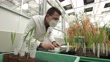
GATERSLEBEN, GERMANY - APRIL 22: Biology lab assistant Marius Dölling snips leaf samples from barley plant variants for DNA analysis at the Leibnitz Institute of Plant Genetics and Crop Plant Research (IPK) on April 22, 2021 in Gatersleben, Germany. The IPK conserves approximately 150,000 live samples of nearly 3,000 species of crop plants and wild relatives. Through genetic sequencing the institute uses the samples as a resource for breeding biodiverse hybrids suited to modeled environmental scenarios of the future. The IPK also includes a hall that enables scientists to grow plants under precise environmental conditions, such as intensity and color temperature of light as well as temperature, humidity, CO2 content, air flow and other characteristics. Germany has seen consecutive years of drought that scientists expect to continue as a consequence of global warming, creating the need for crop plants better suited to thrive and provide high yields in dryer conditions. The IPK’s seed bank of crop plants is the largest in the European Union. (Footage by Sean Gallup/Getty Images)


Get personalised pricing by telling us when, where, and how you want to use this asset.
DETAILS
Getty Images editorial coverage is captured by expert trusted visual journalists. Learn more about our editorial policies.
- Laboratory Videos
- 4K Resolution Videos
- Agriculture Videos
- Analysing Videos
- Assistant Videos
- Barley Videos
- Biology Videos
- Business Finance and Industry Videos
- Cereal Plant Videos
- Climate Change Videos
- Colour Image Videos
- DNA Videos
- Economy Videos
- Environment Videos
- Environmental Issues Videos
- Film - Moving Image Videos
- Finance and Economy Videos
- Germany Videos
- HD Format Videos
- Horizontal Videos
- Leaf Videos
- Nature Videos
- Raw Footage Videos
- Real Time - Footage Videos
- Research Videos
- Saxony-Anhalt Videos
- Science and Technology Videos
- Social Issues Videos
- Video with Sound Videos